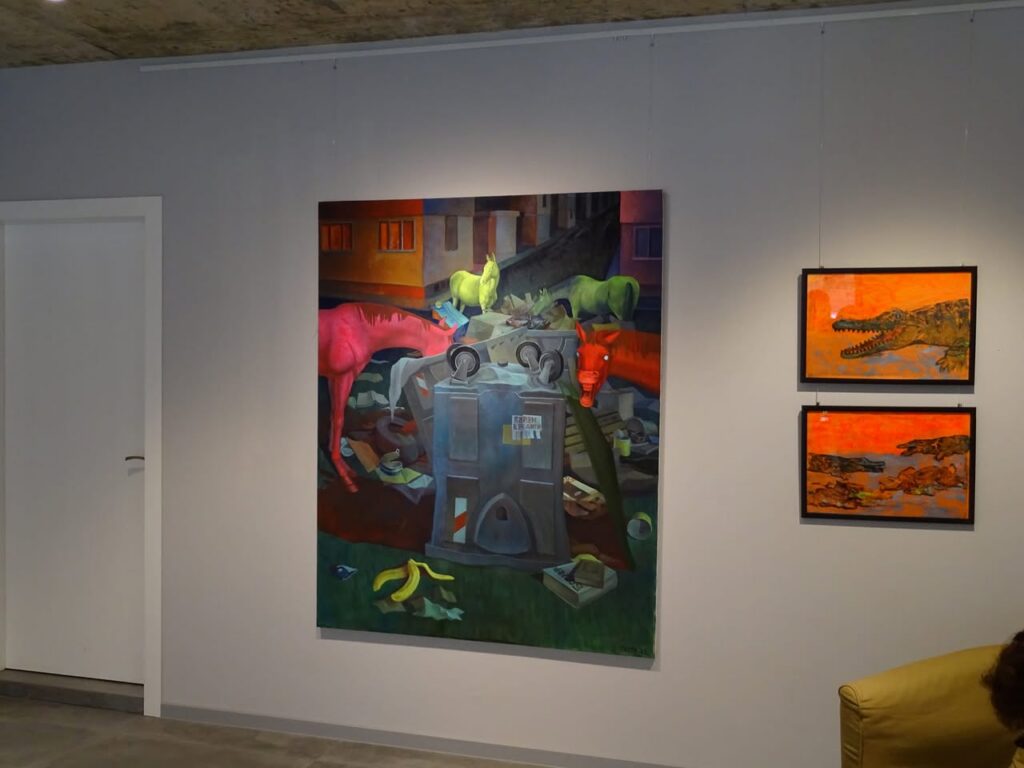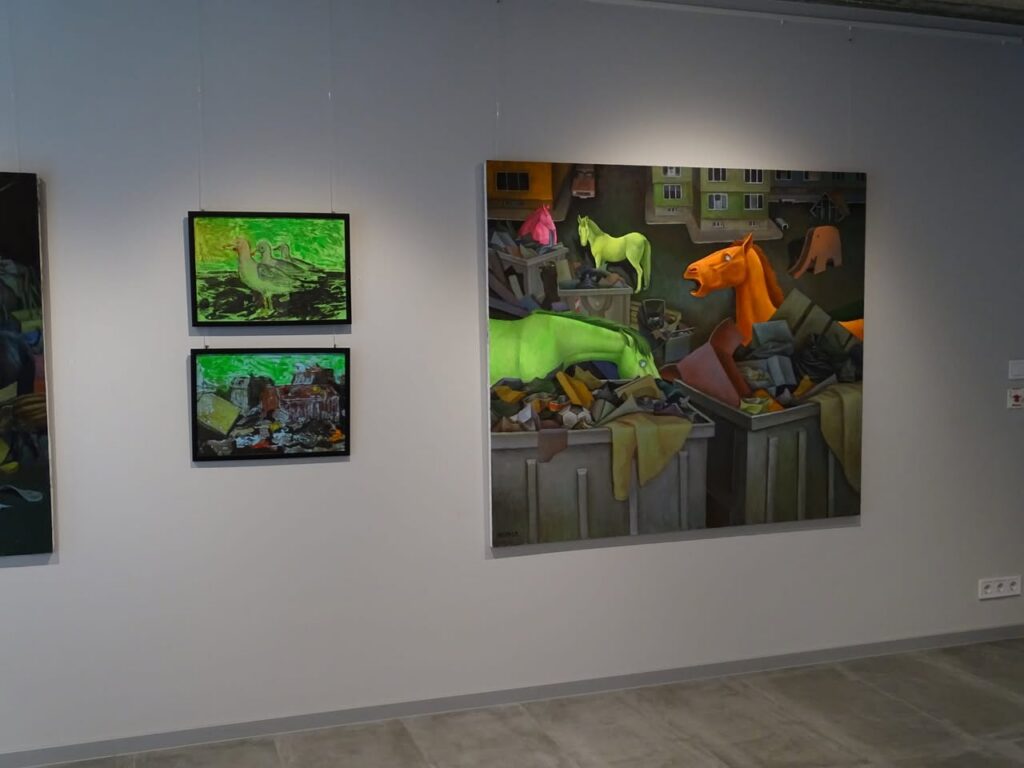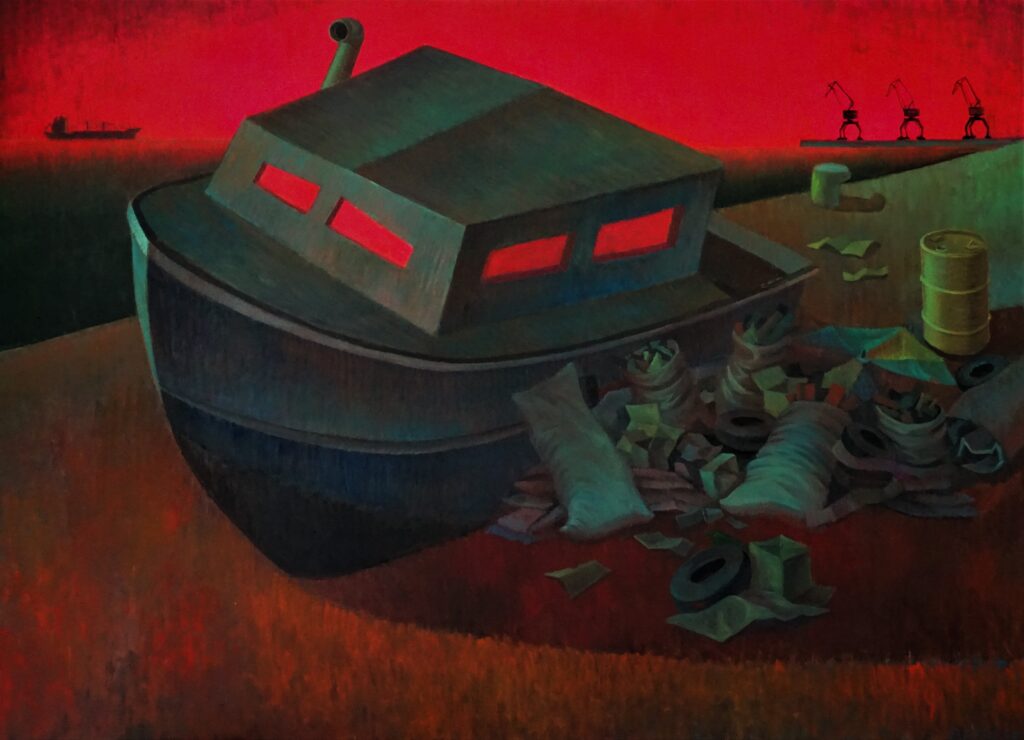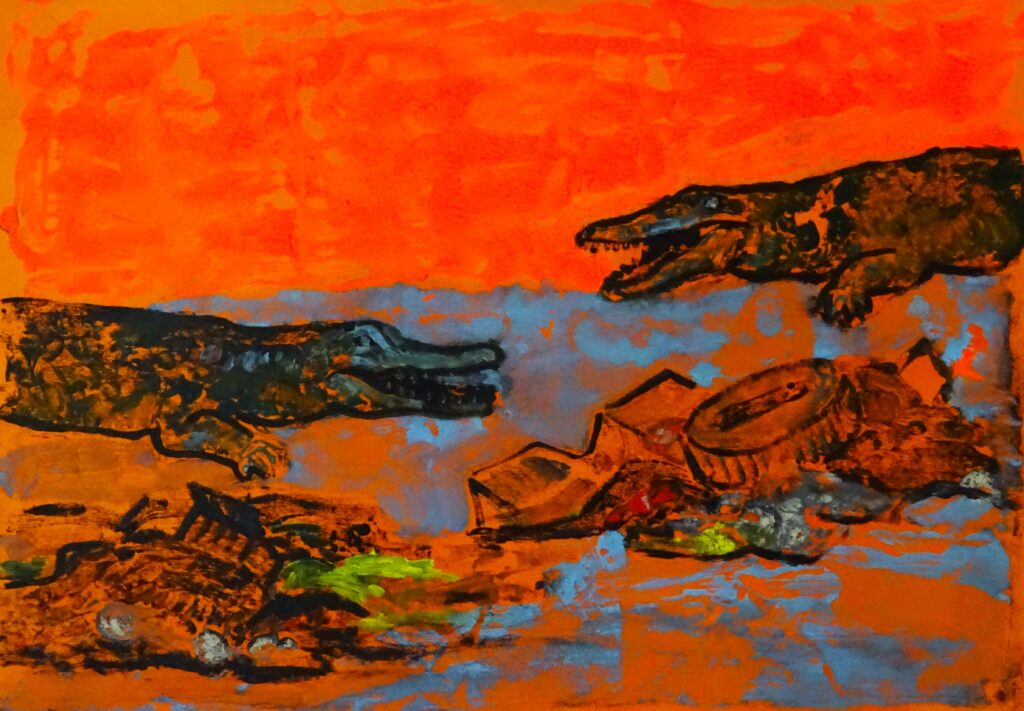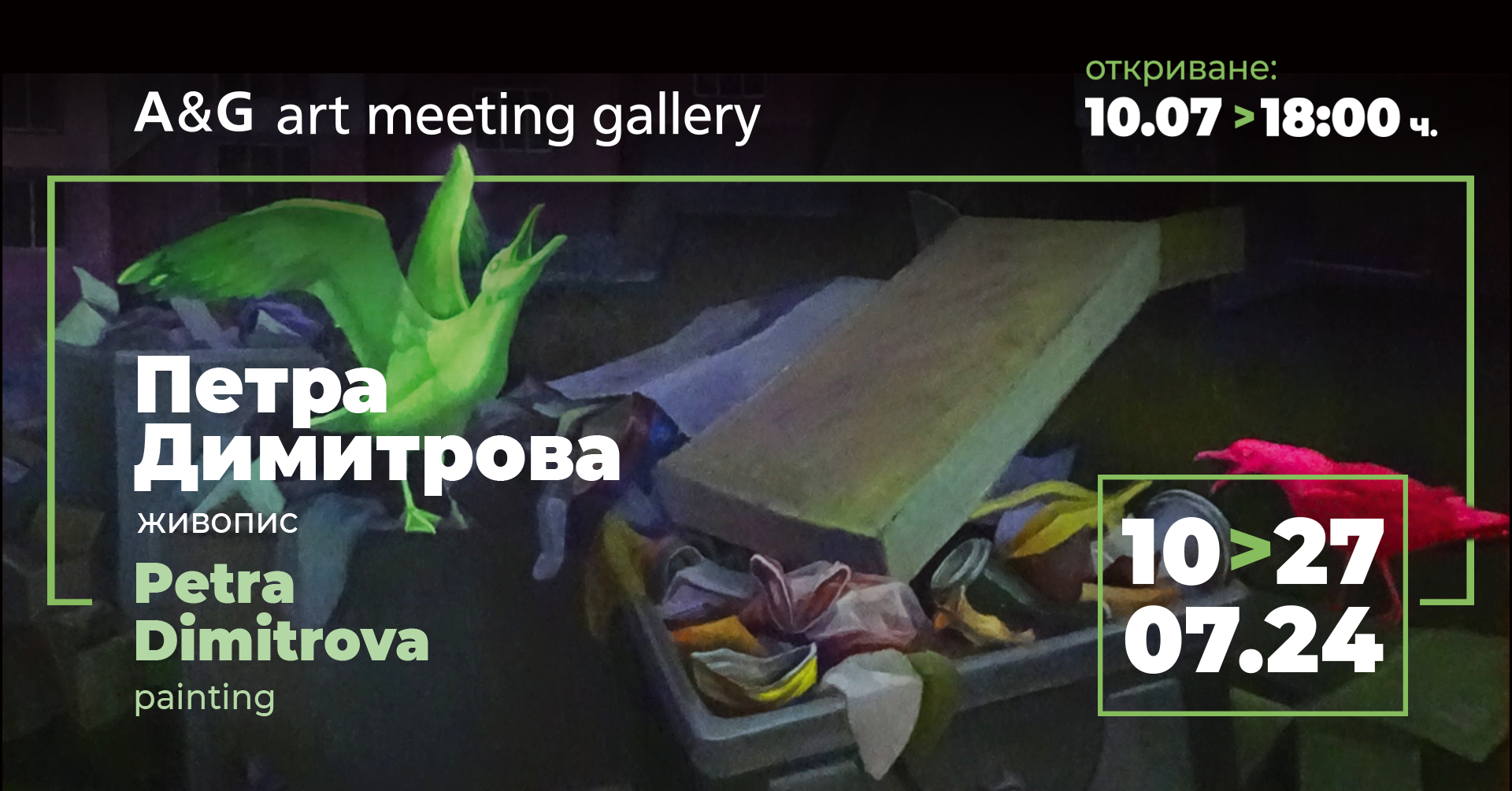
Probably each of us has at some point been curious to peek into the contents of a container or a public trash can, just as we might glance at the food on a neighboring table in a restaurant or on a neighbor’s balcony. People throw away all sorts of things, and that is why trash is a material reflection of our society, of the way we live and consume. If someone decides to explore our civilization, they would certainly turn their gaze to the trash. Petra also takes on the role of such a detective-archaeologist. Her paintings are reminiscent of the classic exercise of drawing arbitrary, abstract volumes, such as those of crumpled paper or Leonardo’s attempts to graphically depict clouds. In this case, this precise outline of the chaos we find ourselves in delicately criticizes it, through the irony of its own aestheticization. In this artistic language, trash appears as a shapeless, amorphous mass, a volume of superfluous and impersonal matter that has lost its meaning. Let us just think about how valuable a pair of scissors, a saucepan, a radio, or a pair of jeans was considered in the past, in contrast to today.
Alexander Gabrovsky