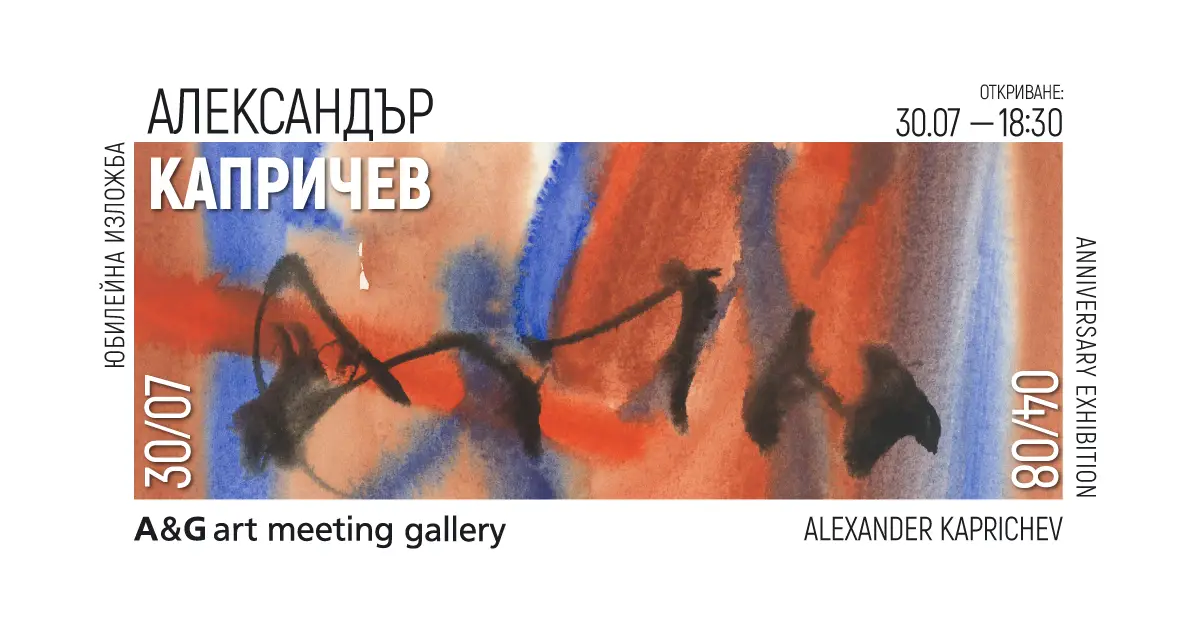
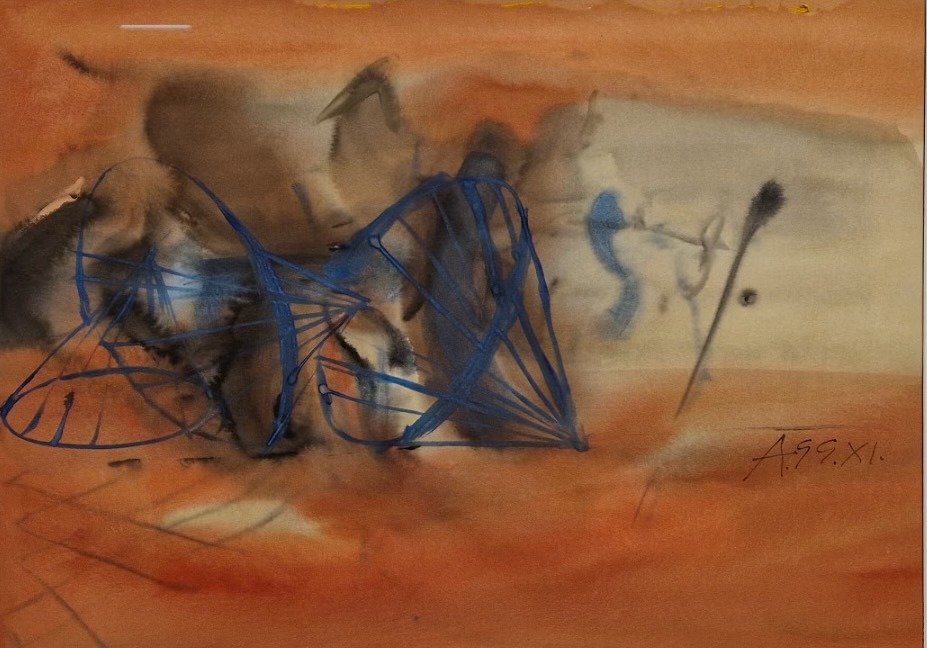
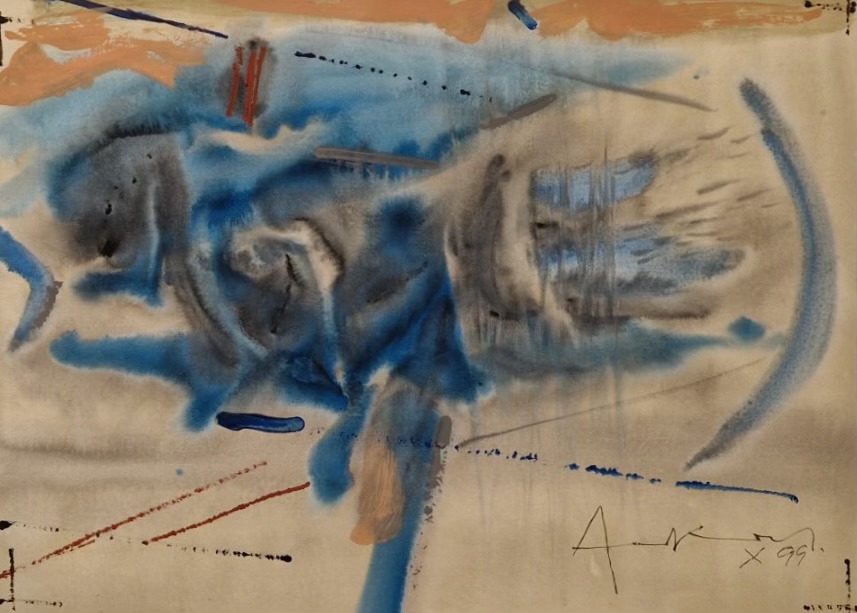
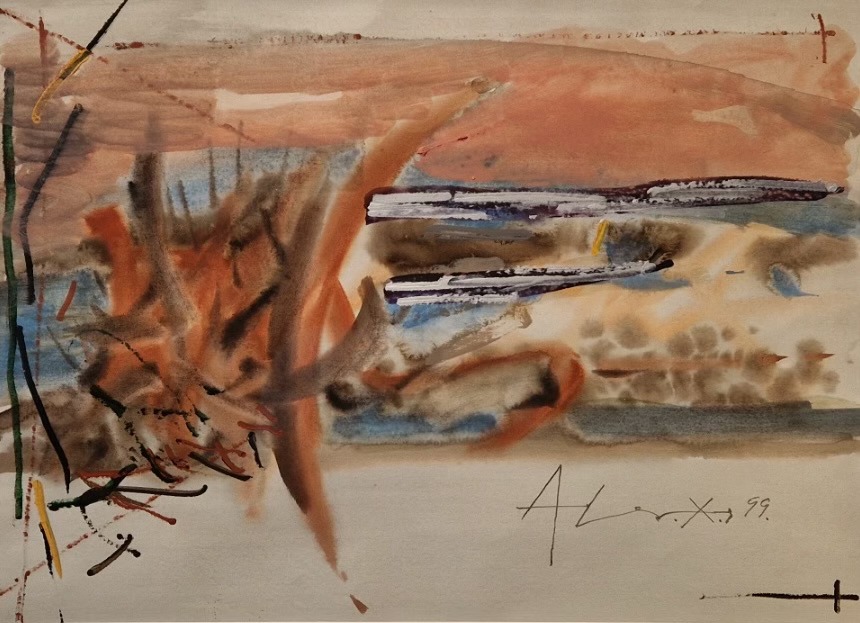
I am trying to explain the optics and poetics of the pure energy-charged presence of Alexander Kaprichev’s paintings. The simultaneous superimposition of the flow of constant transformations of forms, perspectives, memory imprints and crystallization of the unchanging, transformed into a sign, into a symbol, corresponds to the fully conscious, sought-after musicality of this painting.
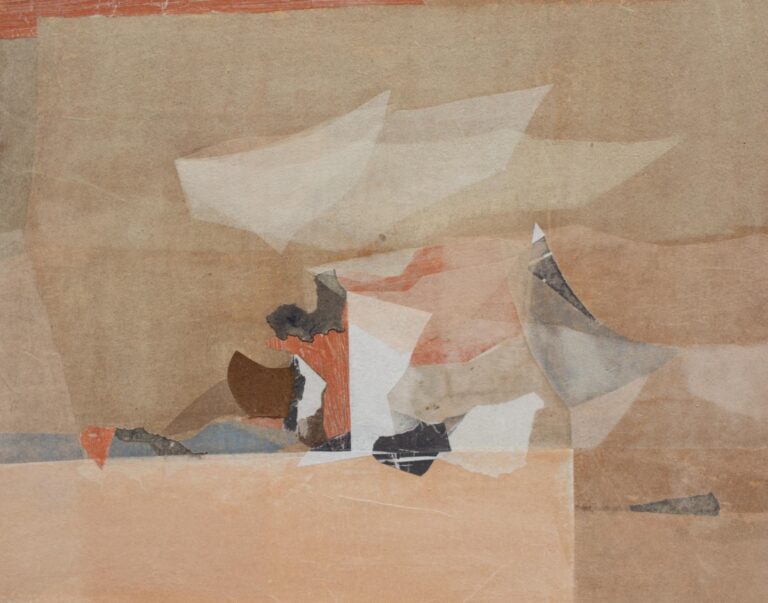
Musical cycles and analogies in the visual arts appear especially in the pursuit of representing the invisible through the visible – for example, Time or the never-ending, present moment. In Paul Klee, the idea of abstraction and music is related to the temporal, as inherent in the creativity of nature and art. Klee adapted conductor gestures into graphic signs – hieroglyphs, visually filled with musical content, from which he made a series of drawings of boats and ships. Ship sails and ropes – symbols of the course of the celestial bodies, winds and light in the metaphor of the weft of temporal existence – are a common motif in William Turner – the forerunner of abstractionism. I find a meaningful correspondence between the visual aesthetics of these artists and Alexander Kaprichev. Characteristic of his paintings is the multifaceted intersection of spaces and differently flowing times. It is no coincidence that the dominant titles, pointing to the musical sound, are “Composition”. The light permeability, the transparency of this painting refines the ability of the gaze to search, to see – through sails (ship and picturesque), strings, bows, arrows, nets, different distances between them, beyond horizons. A self-exploration through creation – from the internal archive of images, sounds, lights, atmospheres and listening to the beginning. Similar to the metaphysics of the pre-Socratics, who contemplate and hear the speech of the elements – stoiheion – the “pro-sounding” of being. For Heraclitus, fire is the potency from which everything unfolds. For Empedocles, water is one of the first sounds of being, a play of forms, of time and memory.
Alexander Kaprichev’s paintings invariably feature, as an aspiration, a horizon – the final edge of the surface of the visible in contact with the infinite.
Penka Kazandzhieva, art critic, National Academy of Music, Sofia
Пенка Казанджиева, изкуствовед, Национална Музикална Академия, София